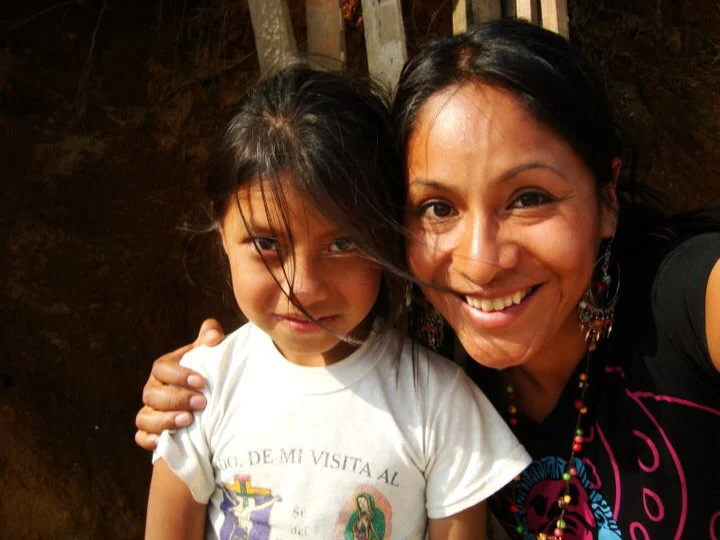
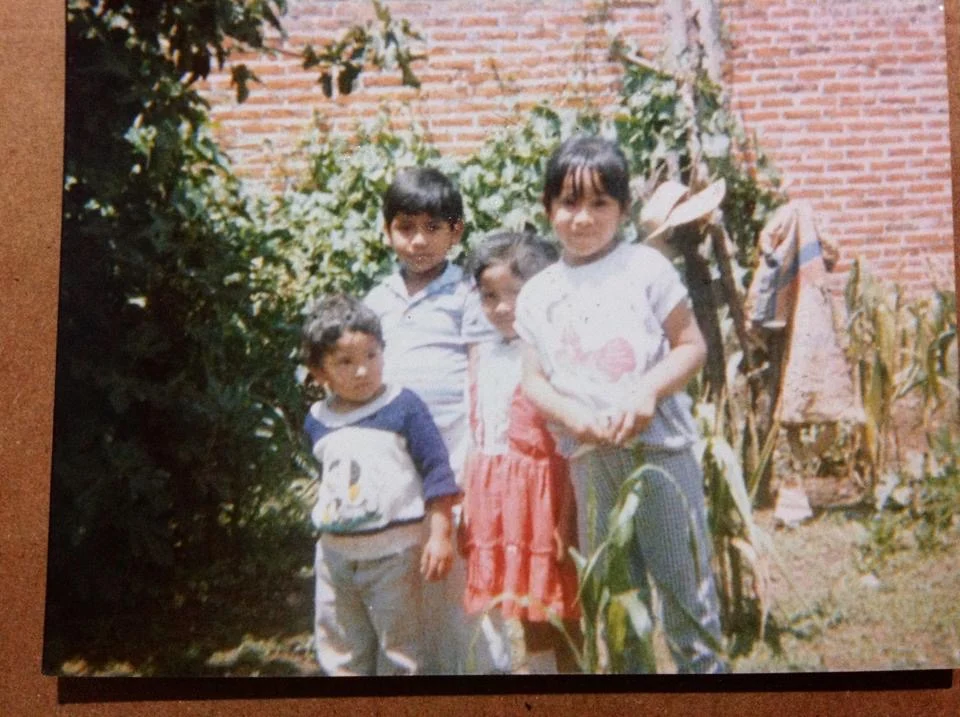
Lucía Esmeralda Gutiérrez was born and raised in a Purépecha community in Michoacán, Mexico. Her formation is territorial. She was shaped by agricultural cycles, wood-fired ovens, medicinal plants, and the discipline of land-based survival.
Raised by her maternal grandparents after her mother migrated to the United States, Lucía grew up within a lineage-centered household. Her grandfather maintained a bakery sustained by live fire; her grandmother cultivated crops, tended animals, and worked daily with medicinal plants. Knowledge was not conceptual — it was embodied, practical, and intergenerational.
Fire, soil, fermentation, planting, harvesting, healing — these were not separate domains. They were infrastructure.
Her early exposure to land-based knowledge did not romanticize tradition; it normalized responsibility. It taught her that health, ecology, and community stability are inseparable.
Academic Formation & Systems Literacy
Lucía later earned her degree in Environmental Biochemical Engineering in Michoacán, specializing in water treatment, microbial systems, waste management, and ecological regeneration. For her, science was never a departure from ancestry. It was another language for understanding living systems.
She worked for over a decade within municipal government in Mexico across water systems, cultural programming, youth development, and public communication. This experience shaped her structural understanding of institutions, governance, and policy implementation.
In the United States, she contributed to sustainability initiatives, served as a fellow with USDN, and was supported by NDN Collective. She has worked within municipal sustainability offices and remains engaged in civic processes advocating for Latino voter rights and racial equity.
Lucía moves fluently between community-based knowledge and institutional frameworks. She understands both their power and their limitations.
Birth Work & Traditional Medicine
The birth of her children marked a profound redirection toward maternal health and ancestral postpartum care. Lucía trained as a doula in both Mexico and the United States and continues her professional formation in midwifery.
Her education includes study with Purépecha elders in her community, formal midwifery programs, and mentorship with traditional medicine practitioners across Mexico. She integrates trauma-informed care, nervous system literacy, and contemporary research on fascia and neurophysiology with ancestral postpartum practices.
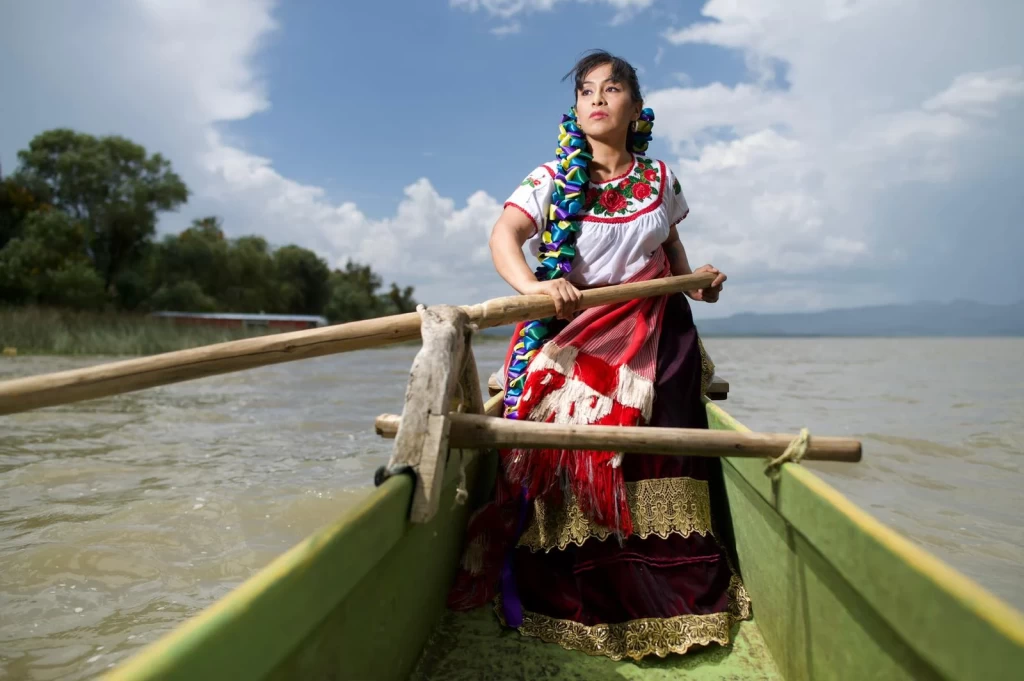
Her specialization in the use of the rebozo represents a central pillar of her work. She is actively advancing the technical, biomechanical, and cultural integrity of rebozo practice at a high level, countering superficial commodification and extractive teaching models. For Lucía, the rebozo is a relational technology — both structurally precise and culturally sacred.
Herbal Medicine & Ritual Product Line
Lucía cultivates her own medicinal plants and formulates a line of herbal products that reflect both traditional Mexican medicine and phytochemical knowledge.
Her offerings include:
• Medicinal tinctures
• Herbal therapeutic baths
• Ritual integration kits
• Space-cleansing plant blends
Each product is grown, harvested, and formulated under her direct care. Her work integrates plant chemistry, agricultural stewardship, and ceremonial understanding without separating science from ancestral practice.
Ethical Commerce & Community Investment
Lucía maintains an ethical commerce model rooted in accountability to Indigenous artisans and communities. She contextualizes the biocultural significance of each artisan piece she offers and rejects decontextualized consumption.
Through her nonprofit initiative and personal financial contributions, she has supported mobile libraries, women-led collectives, youth sustainability workshops, and community-based educational projects in Purépecha regions. Much of this work is intentionally undocumented in marketing spaces.
Her approach to business prioritizes reciprocity over visibility.
Trauma, Autonomy & Community Care
Lucía is a survivor of sexual abuse, domestic violence, and community harm. Much of her healing unfolded independently, shaping her deep understanding of hyper-independence as a survival response.
Her work now supports individuals who have learned to endure alone — those who have built strength out of necessity but seek integration beyond survival. She integrates trauma literacy, ancestral containment practices, and structural awareness of how colonial and patriarchal systems shape internal resilience patterns.
She believes autonomy and community care must coexist.
Intellectual & Political Framework
Lucía operates across four epistemological frameworks:
• Academic
• Experimental
• Oral
• Lineage-territorial
She actively critiques colonial, patriarchal, and extractive systems while remaining grounded in evidence-informed, community-centered practice. Her work bridges biochemical science, Purépecha ancestral medicine, regenerative ecology, and political consciousness.
Decolonization, for her, is not aesthetic — it is structural.